
Six-month doctoral fellowship at the Renal and Cardiovascular Research Unit, University of Salamanca, made possible by ČSAT
Authors:
S.niloufar Mohammadi
Authors place of work:
Department of Biological and Medical Sciences, Faculty of Pharmacy in Hradec Králové, Charles University
Published in the journal:
AtheroRev 2026; 11(2): 126-128
Category:
Zprávy
Summary of the stay
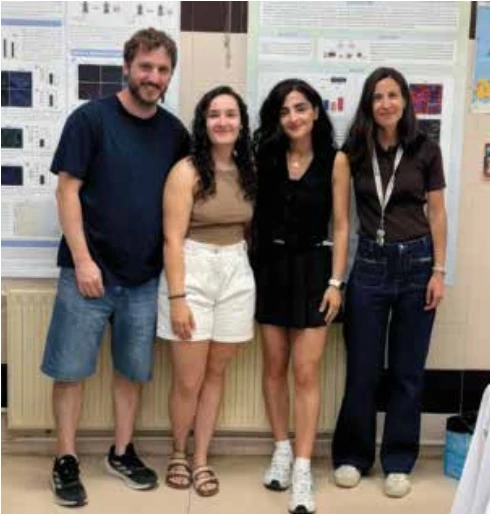
Thanks to the Fellowship of the Czech Society for Atherosclerosis (ČSAT), I was able to spend six months at the University of Salamanca in Spain, from January to June 2026, where I joined the Renal and Cardiovascular Research Unit, Department of Physiology and Pharmacology, at the University of Salamanca. This research stay will always be an important part of my scientific career and gave me the opportunity to experience an advanced research environment in the renal and cardiovascular research, develop new experimental skills, and establish international scientific connections.
The University of Salamanca is a historical and outstanding place to spend this period. Founded in 1218, it is one of the oldest universities in Europe and the oldest university in Spain. Being able to work and study in an institution with such a long academic tradition was a special experience for me. At the same time, Salamanca itself is a beautiful and historic university city, with impressive architecture and a very lively student atmosphere. During this research stay, I worked under the supervision of Professor Miguel Perricacho in the Renal and Cardiovascular Research Unit, alongside Professor María González-Núñez and Dr. Blanca Ayuso Íñigo, whose guidance was invaluable throughout the stay. Being part of this team gave me experience of how a research group with a strong track record in vascular and endothelial biology organizes and conducts its work from hypothesis generation through to histological and molecular validation. Working in a new laboratory environment also pushed me to become more independent and confident in performing experiments, while learning how a different research culture approaches shared scientific questions in vascular pathology, which have direct parallels in atherosclerosis research.
During this research stay, I worked on 2 different projects. Both covered a on a shared theme; the biology of the vascular endothelium and its response to pathological stimuli, whether through remodeling of existing vessels, abnormal neovascularization, or unusual endothelial signaling. Moreover, I learned and performed complex statistical analyses of cardiovascular research data, an essential skill for accurately interpreting experimental data in this field.
Description of the topic and work during the research stay
Research project 1: hereditary hemorrhagic telangiectasia
During this research stay, I worked on hereditary hemorrhagic telangiectasia (HHT), a genetic disorder most commonly caused by mutations in endoglin that lead to abnormal endothelial signaling and the formation of fragile, abnormal blood vessels. Although the genetic basis of HHT is well established, the mechanisms underlying vascular malformations remain incompletely understood. Moreover, the links between HHT, endothelial dysfunction, vascular inflammation, and atherosclerotic disease remain understudied, making this research relevant to understanding cardiovascular risk and disease mechanisms in HHT patients.
I contributed to projects aimed at better understanding HHT by performing western blotting, histological techniques, and immunohistochemistry, as well as assisting with mouse surgical procedures and in vivo experiments in endoglin deficient mice. These techniques significantly expanded my practical laboratory skills and provided valuable experience that will support the further development of HHT research in the Czech Republic and my future research.
Details of the project and relevance to atherosclerosis
This work directly aligned with the mission and research priorities of the atherosclerosis scientific community by advancing our understanding of vascular pathology.
Endoglin is a type III co-receptor of the TGF-β signaling pathway that is highly expressed in vascular endothelial cells. TGF-β signaling plays an important role in regulating endothelial homeostasis, vascular smooth-muscle-cell function, inflammation, and vascular remodeling, processes that are also central to the development and progression of atherosclerosis. Endoglin expression itself has been shown to be altered in the endothelium overlying atherosclerotic lesions and at sites of vascular injury, and circulating soluble endoglin has been investigated in the cardiovascular literature as a marker associated with endothelial dysfunction, hypertension, and many more cardiometabolic disorders. Working directly on endoglin biology in the HHT model system gave me practical experience with the signaling pathway and protein family that is of growing interest to this research. The molecular techniques I applied to detect and quantify endoglin-related signaling in HHT tissue can be directly adapted to investigate endoglin and TGF-β pathway activity in the vessels. Furthermore, HHT itself serves as a classic genetic disease model for studying fundamental vascular biology. I was personally responsible for performing Western blotting and quantifying mouse Endoglin expression alongside a housekeeping control to assess vascular signaling for the whole study. Moreover, I assisted with in vivo procedures involving endoglin-deficient (HHT model) mice. All of these skills and experiences will help us better understand vascular biology and pathology and provide a foundation for investigating how these mechanisms may be connected. Moreover, endoglin itself was a major focus of my research. Together with its soluble form, it has been extensively studied in the cardiovascular field, and my research will contribute directly to advancing our understanding of its role.
Research project 2: vascular co-option
One of the main areas I was involved in was vascular co-option in the liver. While angiogenesis is a well-known and extensively studied mechanism, vascular co-option is much less understood. In this process, pathological tissue can make use of already existing blood vessels (hijacking the existing one) instead of creating new ones. I worked with liver samples in which vascular co-option was suspected. My work included studying vascular co-option in the liver and identifying potential markers that could be used to detect and characterize this process. I reviewed and selected relevant markers, presented and discussed the findings with the research team, and was involved in processing the liver samples. I then performed various staining procedures, including histological and immunohistochemical analyses, to evaluate the selected markers and help identify and better understand the changes associated with vascular co-option.
Details of the project and relevance to atherosclerosis
This part of my research stay aligned with exploring novel microvascular mechanisms that may contribute to vessel remodeling.
Although vascular co-option is most often discussed in tumor biology, the underlying question of how existing blood vessels are remodeled, recruited, or hijacked by surrounding tissue, is directly involved in fundamental vascular biology. Understanding the balance between new vessel formation and the remodeling or co-option of existing vessels within diseased tissue provides a broader conceptual and methodological framework that can be applied to studying how microvasculature behaves. In immunohistochemistry and immunofluorescence, the markers and staining techniques I personally did included PECAM-1, endomucin, Ki67, CD18, and hematoxylin and eosin staining. PECAM-1 and endomucin define microvascular density and endothelial integrity, Ki67 quantifies proliferation to distinguish active angiogenesis from vessel co-option, CD18 tracks plaque-destabilizing inflammation, and H&E reveals structural damages, together delivering a comprehensive understanding of vessels and vascular remodeling. Moreover, the specific markers I have worked with are highly relevant to experimental research in the cardiovascular field, particularly in the study of atherosclerosis. I will use this knowledge to continue my research here as a scientist in this field.
Development of experimental and analytical skills
Beyond wet laboratory techniques, this fellowship provided valuable training in experimental design, sample processing, and quantitative data analysis in the cardiovascular field. Working under the mentorship of Professor Pericacho, as an expert in the statistical analysis of this field, I gained practical experience in sample preparation and statistical analysis of cardiovascular datasets. This training increased my ability to independently analyze complex data, assess its reliability, and maintain scientific accuracy in future vascular and atherosclerosis research. As a scientist conducting research on atherosclerosis, acquiring and applying this new set of skills has been essential to our research.
Conclusion of findings in the research stay
Overall, this fellowship has enabled me to acquire and apply new techniques and methodologies in vascular histology, immunohistochemistry, protein biochemistry, in vivo vascular models, and advanced statistical analysis, thus strengthening my expertise in cardiovascular and atherosclerosis research. I gained experience with fluorescent immunohistochemistry and marker validation to study blood vessel structure, cell growth, and immune cell recruitment. I also gained extensive experience managing and studying transgenic, endoglin-deficient mouse models. In addition, I developed skills in statistical analysis and interpretation of cardiovascular research data, including evaluating data reliability and identifying differences. These new skills and methods will be directly useful for studying vascular biology, cardiometabolic disorders, and exploring their potential links and their roles in atherosclerosis.
Everything mentioned above would not have been possible without the support of the ČSAT.
With regards and the biggest thank you,
PharmDr. Niloufar Mohammadi
Štítky
Angiologie Diabetologie Interní lékařství Kardiologie Praktické lékařství pro dospěléČlánek vyšel v časopise
Athero Review
2026 Číslo 2
Nejčtenější v tomto čísle
- Kardiovaskulární prevence v každodenní praxi
- Consensus on the treatment of hyperuricemia in individuals at high cardiovascular risk – update 2025: brief summary
- Semaglutide in the 2026 European Society of Cardiology guidelines
- The level of control of cardiovascular risk factors in patients with type 2 diabetes and hypertension in the routine clinical practice of primary care physicians: results of the BEAT study